


Feminist Thoughts On Marriage: A Choice, Not a Destiny?

From the time we are little girls, many of us are taught that life follows a script. Fall in love. Get married. Buy a house. Have children. Grow old together. It is presented as the natural progression of adulthood, as though marriage is less of a choice and more of a milestone.
But what if we stopped asking when we're getting married and started asking why? what's in it for us? is love enough?
Why do so many women feel anxious if they aren't married by 30 or 35? Why do people still ask successful, independent women, "Have you found someone yet?" but rarely ask whether they've found purpose, peace, or themselves?
These are not new questions. Feminist thinkers have been asking them for decades.
Marriage and Women's Freedom
In The Second Sex, Simone de Beauvoir argued that women have historically been defined in relation to men rather than as independent individuals. She described marriage as one of the institutions through which women were expected to find meaning, often sacrificing autonomy in the process.
Her point was not that love is meaningless or that every marriage is oppressive. Rather, she questioned why women's identities have so often been tied to becoming wives.
That question remains relevant.
How often do women change their names after marriage? Move for a partner's career? Carry the greater share of unpaid domestic labor? lose their identity after childbirth? Put their ambitions on hold because the family needs them?
"The Heart of Women's Oppression"

Radical feminist Shulamith Firestone made one of the most provocative arguments about marriage and the family:
"The biological family is the source of the psychology of power."
Firestone argued that traditional family structures were not simply private arrangements but systems that helped reproduce unequal power between men and women. Whether or not one agrees with her conclusions, she challenged readers to ask whether institutions we consider "natural" are actually social constructions.
She also describes romantic love as central to
women's oppression, portraying it as a kind of hell and sacrifice. Maybe far fetched, but you can decide for yourself how much this reflects your own experiences or the expereinces of women around you.
Origins of Patriarchy
Sociologist Carol Smart spent much of her career examining family life and questioned the romanticized image of marriage. Rather than viewing families as automatically loving or equal, she encouraged people to recognize the power dynamics and inequalities that can exist within intimate relationships.
For many women, marriage has historically offered security, but often at the cost of economic dependence, unequal domestic labour, or reduced autonomy.
Thankfully, thanks to the hard work of second wave feminists, women today can have our own bank accounts, own homes, pursue higher education, and build careers without needing a husband's permission. So where did the rise of the "trad wife" come from? Why are so many young women embracing it?
Even within my own friend group, I know women who believe their role is to stay home and that society has tried to convince them otherwise. But has it? In many ways, society has been teaching girls that caregiving is their primary role since childhood, through baby dolls, playing house, being praised for being nurturing, and often being encouraged toward caregiving professions. These messages are reinforced through media, religion, and traditional gender expectations.

We also have to ask ourselves: how many women have we seen as presidents, prime ministers, CEOs, or prominent religious leaders? Women remain underrepresented in many positions of power, and in some religions they are still excluded from leadership roles. That doesn't happen by accident, it reflects long standing social structures that have historically limited women's access to power.
But if patriarchy wasn't always the norm, where did it begin? Thousands of years ago, many women worked alongside men, farmed, traded, and held important social and economic roles. Anthropologists and historians continue to debate the origins of patriarchy, with theories ranging from the development of agriculture and private property to organized religion and state formation.
In Canada, British colonization certainly reinforced patriarchal laws and institutions, but patriarchy did not begin with colonization alone. Many Indigenous nations had social systems that gave women significant political, economic, and spiritual authority. For example, in Haudenosaunee (Iroquois) communities, Clan Mothers selected and removed chiefs, and many Indigenous societies traced family lineage through the mother's line. Colonization disrupted many of these systems by imposing European legal, religious, and gender norms. So perhaps the better question isn't, "What happened?"
It's: Who benefits when women believe their highest purpose is to care for everyone else before themselves?
Are Married Women Happier?

This is where the conversation becomes more nuanced.
Research generally finds that people in satisfying, healthy relationships tend to report higher well-being than people in unhappy relationships. However, studies also show that the quality of the relationship matters far more than marital status itself. Women in unhappy marriages often report lower life satisfaction than women who are single, and women today are increasingly choosing to remain single rather than enter relationships that diminish their quality of life.
Studies also show that women continue to perform a disproportionate share of unpaid household and caregiving labor, even in many dual income households. Pew Research Center and other researchers have documented these persistent inequalities.
The question isn't whether marriage makes women happy.
It's whether your marriage does.
Does your partner see you as an equal? Do they share your values? Do they expect you to carry the emotional labor, the housework, and the caregiving because you're a woman? Marriage isn't the problem. An unequal marriage is.
Who Decided There Was a Deadline?
Perhaps the most puzzling social expectation is the timeline.
By your late twenties, people begin asking.
By your thirties, they ask more often.
If you're single at forty, many assume something must be wrong.
But according to whom? I would love to know.
Historically, marriage was largely an economic and political institution. Families arranged marriages to preserve land, wealth, inheritance, and social status. Religious traditions later reinforced marriage as a moral ideal. Much of what we now consider "normal" is rooted in those historical and religious structures, not in any universal human truth. So if you aren't religious, or you don't believe marriage is necessary, why should someone else's timeline become your own?
Living Outside the Script
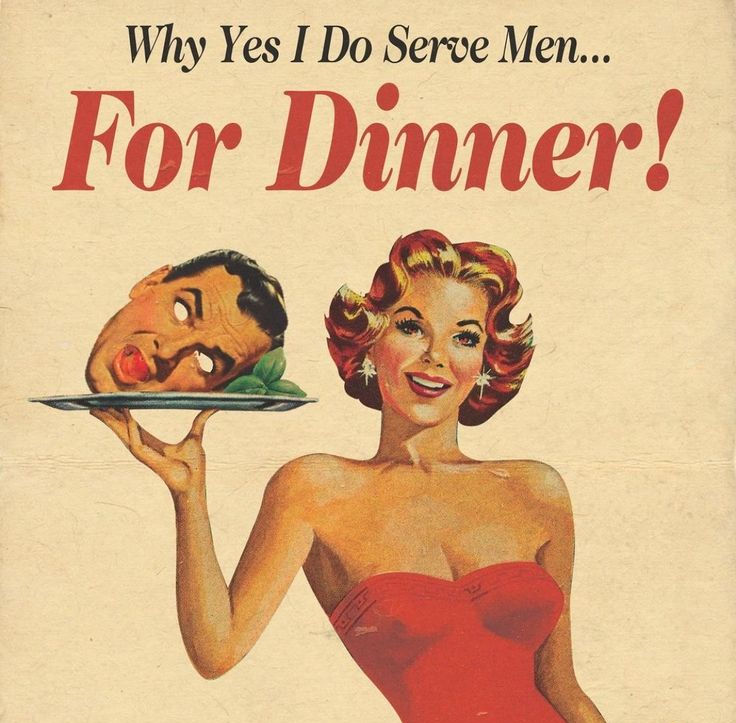
There is nothing inherently feminist about rejecting marriage.
There is also nothing anti-feminist about choosing it.
The feminist question is different:
Are you choosing your life, or are you following a script you never agreed to? What do you want out of life?
Marriage should be one possibility among many, not the measure of a successful life.
A meaningful life can be built through friendships, community, creativity, travel, education, volunteering, parenthood, career, spirituality, or simply learning to enjoy your own company.
Perhaps the greatest act of freedom is becoming a whole person before asking someone else to complete you.
Find what fascinates you.
Develop your own values.
Travel.
Create.
Read difficult books.
Build friendships.
Learn new skills.
Spend time alone without feeling lonely.
Love yourself enough that any relationship becomes an addition to your life, not its foundation.
Because a woman who knows who she is no longer needs society to tell her who she should become.


Comments